Besides regular toothbrushing, your child’s diet will play a key role in his dental health.
Why Sugar is the Big Villain
The longer and more frequently his teeth are exposed to sugar, the greater the risk of cavities. “Sticky sugar” foods such as sticky caramel, toffee, gum, and dried fruit—particularly when it stays in his mouth and bathes his teeth in sugar for hours—could do serious damage.
Make sure to always brush your child’s teeth after a sugary food item.
Do not allow young children to have any sugar-containing liquid in a sippy cup for a prolonged period.
https://www.mcbiermann.com/wp-content/uploads/2015/11/healthy-diet-for-kids.jpg300702mbiermannhttps://www.mcbiermann.com/wp-content/uploads/2014/09/lgoo.pngmbiermann2015-11-14 03:21:332015-11-14 03:21:33Healthy Teeth and Your Child’s Diet
Did you know that pediatric dental disease, also referred to as childhood tooth decay, is the #1 chronic childhood illness? When left untreated, childhood tooth decay can have devastasting consequences that extend beyond the dental chair. Rampant decay can negatively impact a child’s overall quality of life, inhibit their cognitive and social development and compromise their growth, function and self esteem.
Pediatric dental disease is 5 times more common than asthma and 7 times more common than hay fever.
Left untreated, pediatric dental disease can lead to malnourishment, bacterial infections, required emergency surgery and even death.
Pain and infection caused by tooth decay can lead to problems in eating, speaking and learning.
Dental disease has been linked to heart disease, stroke, diabetes, pneumonia, poor pregnancy outcomes and dementia.
Women may be more susceptible to oral health problems because of the unique hormonal changes they experience. Hormones affect not only the blood supply to the gum tissue but also the body’s response to the toxins (poisons) that result from plaque buildup. As a result of these changes, women are more prone to the development of periodontal disease at certain stages of their lives, as well as to other oral health problems.
When Are Women More at Risk for Oral Health Problems?
There are five situations in a women’s life during which hormone fluctuations make them more susceptible to oral health problems – during puberty, at certain points in the monthly menstrual cycle, when using birth control pills, during pregnancy, and at menopause.
Puberty
The surge in production of the female hormones estrogen and progesterone that occurs during puberty can increase the blood flow to the gums and change the way gum tissue reacts to irritants in plaque, causing the gum tissue to become red, tender, swollen, and more likely to bleed during brushing and flossing.
The monthly menstrual cycle
Due to the hormonal changes (particularly the increase in progesterone) that occur during the menstrual cycle, some women experience oral changes that can include bright red swollen gums, swollen salivary glands, development of canker sores, or bleeding gums. Menstruation gingivitis usually occurs a day or two before the start of the period and clears up shortly after the period has started.
https://www.mcbiermann.com/wp-content/uploads/2015/09/hormones-oral-health.jpg300702mbiermannhttps://www.mcbiermann.com/wp-content/uploads/2014/09/lgoo.pngmbiermann2015-09-16 02:03:562015-09-16 02:07:51Hormones and Oral Health
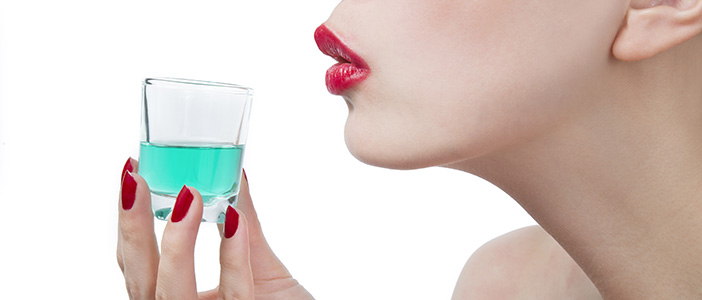
Brush. Floss. Rinse mouth with mouthwash. From a young age, people are taught to follow this procedure to maximize the benefits of proper oral hygiene, but could mouth rinse actually cause more problems than good? According to the April 2007 issue of AGD Impact, the monthly newsmagazine of the AGD, the improper selection of a mouth rinse may cause side effects worse than the condition being treated.
“It all depends on each individual’s oral health concerns,” explains Barbara Rich, DDS, FAGD, AGD spokesperson. “If someone has a lot of inflammation which is causing bleeding gums, then the side effect of staining caused by some prescription mouthwashes may be worth it to improve their health. Staining can be polished off at the regularsemiannual visit to the dentist.”
Dr. Rich further explains, however, that if minty-fresh taste is the only reason for a person using mouth rinses, but they have dry mouth or get ulcers from strong alcohol content in the mouthwash, it may not be worth using it.
https://www.mcbiermann.com/wp-content/uploads/2015/08/choosing-mouthwash.jpg300702mbiermannhttps://www.mcbiermann.com/wp-content/uploads/2014/09/lgoo.pngmbiermann2015-08-12 01:37:002015-08-12 01:41:21Wrong Choice of Mouthwash Could Have Negative Side Effects
A double-blind, randomised, placebo-controlled study in 215 elderly nursing home residents showed that Lactobacillus reuteri Prodentis reduced the prevalence of oral Candida by more than 50 per cent compared to placebo. “The results show that Lactobacillus reuteri Prodentis may be beneficial in patients at risk of oral candidosis”, says Professor Svante Twetman, Department of Odontology, Faculty of Health and Medical Sciences, University of Copenhagen, Denmark.
After 12 weeks of intervention with two lozenges per day of Lactobacillus reuteri Prodentis there was a statistically significant reduction of 53 per cent in the proportion of patients that had high Candida counts in both saliva and plaque in the probiotic group whereas there was no difference in the placebo group.
https://www.mcbiermann.com/wp-content/uploads/2015/08/elderly-oral-health.jpg300702mbiermannhttps://www.mcbiermann.com/wp-content/uploads/2014/09/lgoo.pngmbiermann2015-08-01 04:19:502015-08-01 04:19:50BioGaia’s Oral Health Probiotic Reduces Candida in the Elderly
Your oral health is more important than you might realize. Get the facts about how the health of your mouth, teeth and gums can affect your general health.
Did you know that your oral health can offer clues about your overall health — or that problems in your mouth can affect the rest of your body? Understand the intimate connection between oral health and overall health and what you can do to protect yourself.
What’s the connection between oral health and overall health?
Like many areas of the body, your mouth is teeming with bacteria — most of them harmless. Normally the body’s natural defenses and good oral health care, such as daily brushing and flossing, can keep these bacteria under control. However, without proper oral hygiene, bacteria can reach levels that might lead to oral infections, such as tooth decay and gum disease.
https://www.mcbiermann.com/wp-content/uploads/2015/07/healthy-smiles.jpg300702mbiermannhttps://www.mcbiermann.com/wp-content/uploads/2014/09/lgoo.pngmbiermann2015-07-25 00:41:402015-07-25 00:41:40The Connection Between Oral Health and Overall Health