
All About Dental Implants
Article Featured on WebMD
Despite improvements in dental care, millions of Americans suffer tooth loss — mostly due to tooth decay, gingivitis (gum disease), or injury. For many years, the only treatment options available for people with missing teeth were bridges and dentures. But, today, dental implants are available.
What Are Dental Implants?
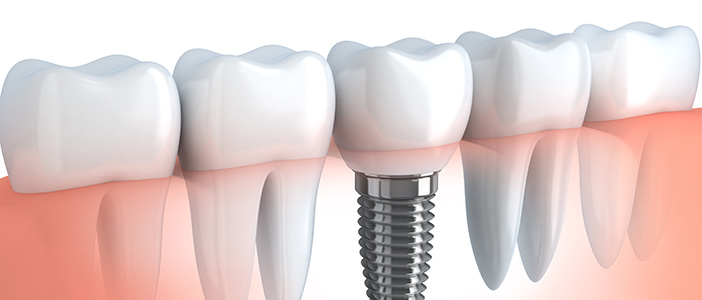
Dental implants are replacement tooth roots. Implants provide a strong foundation for fixed (permanent) or removable replacement teeth that are made to match your natural teeth.
What Are the Advantages of Dental Implants?
There are many advantages to dental implants, including:
- Improved appearance. Dental implants look and feel like your own teeth. And because they are designed to fuse with bone, they become permanent.
- Improved speech. With poor-fitting dentures, the teeth can slip within the mouth causing you to mumble or slur your words. Dental implants allow you to speak without the worry that teeth might slip.
- Improved comfort. Because they become part of you, implants eliminate the discomfort of removable dentures.
- Easier eating. Sliding dentures can make chewing difficult. Dental implants function like your own teeth, allowing you to eat your favorite foods with confidence and without pain.
- Improved self-esteem. Dental implants can give you back your smile and help you feel better about yourself.
- Improved oral health. Dental implants don’t require reducing other teeth, as a tooth-supported bridge does. Because nearby teeth are not altered to support the implant, more of your own teeth are left intact, improving long-term oral health. Individual implants also allow easier access between teeth, improving oral hygiene.
- Durability. Implants are very durable and will last many years. With good care, many implants last a lifetime.
- Convenience. Removable dentures are just that; removable. Dental implants eliminate the embarrassing inconvenience of removing dentures, as well as the need for messy adhesives to keep them in place.
How Successful Are Dental Implants?
Success rates of dental implants vary, depending on where in the jaw the implants are placed but, in general, dental implants have a success rate of up to 98%. With proper care (see below), implants can last a lifetime.
Can Anyone Get Dental Implants?
In most cases, anyone healthy enough to undergo a routine dental extraction or oral surgery can be considered for a dental implant. Patients should have healthy gums and enough bone to hold the implant. They also must be committed to good oral hygiene and regular dental visits. Heavy smokers, people suffering from uncontrolled chronic disorders — such as diabetes or heart disease — or patients who have had radiation therapy to the head/neck area need to be evaluated on an individual basis. If you are considering implants, talk to your dentist to see if they are right for you.
Does Insurance Cover the Cost of Dental Implants?
In general, dental implants are not covered by dental insurance at this time. Coverage under your medical plan may be possible, depending on the insurance plan and/or cause of tooth loss. Detailed questions about your individual needs and how they relate to insurance should be discussed with your dentist and insurance provider.
What Is Involved in Getting a Dental Implant?
The first step in the dental implant process is the development of an individualized treatment plan. The plan addresses your specific needs and is prepared by a team of professionals who are specially trained and experienced in oral surgery and restorative dentistry. This team approach provides coordinated care based on the implant option that is best for you.
Next, the tooth root implant, which is a small post made of titanium, is placed into the bone socket of the missing tooth. As the jawbone heals, it grows around the implanted metal post, anchoring it securely in the jaw. The healing process can take from six to 12 weeks.
Once the implant has bonded to the jawbone, a small connector post — called an abutment — is attached to the post to securely hold the new tooth. To make the new tooth or teeth, your dentist makes impressions of your teeth, and creates a model of your bite (which captures all of your teeth, their type, and arrangement). The new tooth or teeth is based on this model. A replacement tooth, called a crown, is then attached to the abutment.
Instead of one or more individual crowns, some patients may have attachments placed on the implant that retain and support a removable denture.
Your dentist also will match the color of the new teeth to your natural teeth. Because the implant is secured within the jawbone, the replacement teeth look, feel, and function just like your own natural teeth.
How Painful Are Dental Implants?
Most people who have received dental implants say that there is very little discomfort involved in the procedure. Local anesthesia can be used during the procedure, and most patients report that implants involve less pain than a tooth extraction.
After the dental implant, mild soreness can be treated with over-the-counter pain medications, such as Tylenol or Motrin.
How Do I Care for Dental Implants?
Dental implants require the same care as real teeth, including brushing, flossing, and regular dental check-ups.
WebMD Medical Reference

Looking for an orthodontist in Beaverton, Oregon? Biermann Orthodontics is a cutting-edge orthodontic practice that serves Beaverton and Molalla, OR, and focuses on providing world-class customer service and efficient treatment. We strive to create stunning smiles in the shortest amount of time without ever sacrificing quality.
Visit our Locations page to find a clinic near you, or schedule an initial consultation.
Biermann Orthodontics
503-690-0722
17885 NW Evergreen Parkway, Suite 200
Beaverton, OR 97006